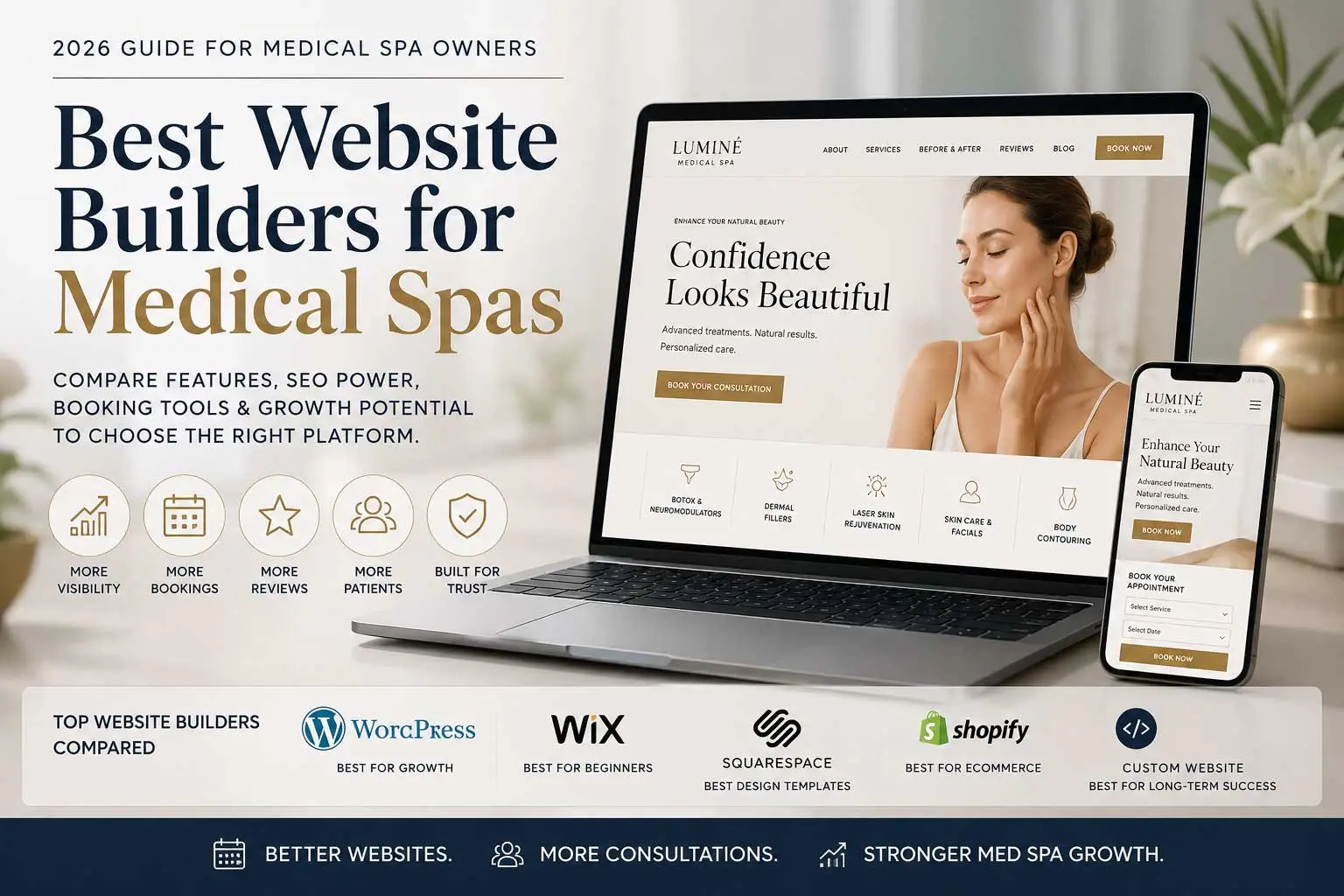

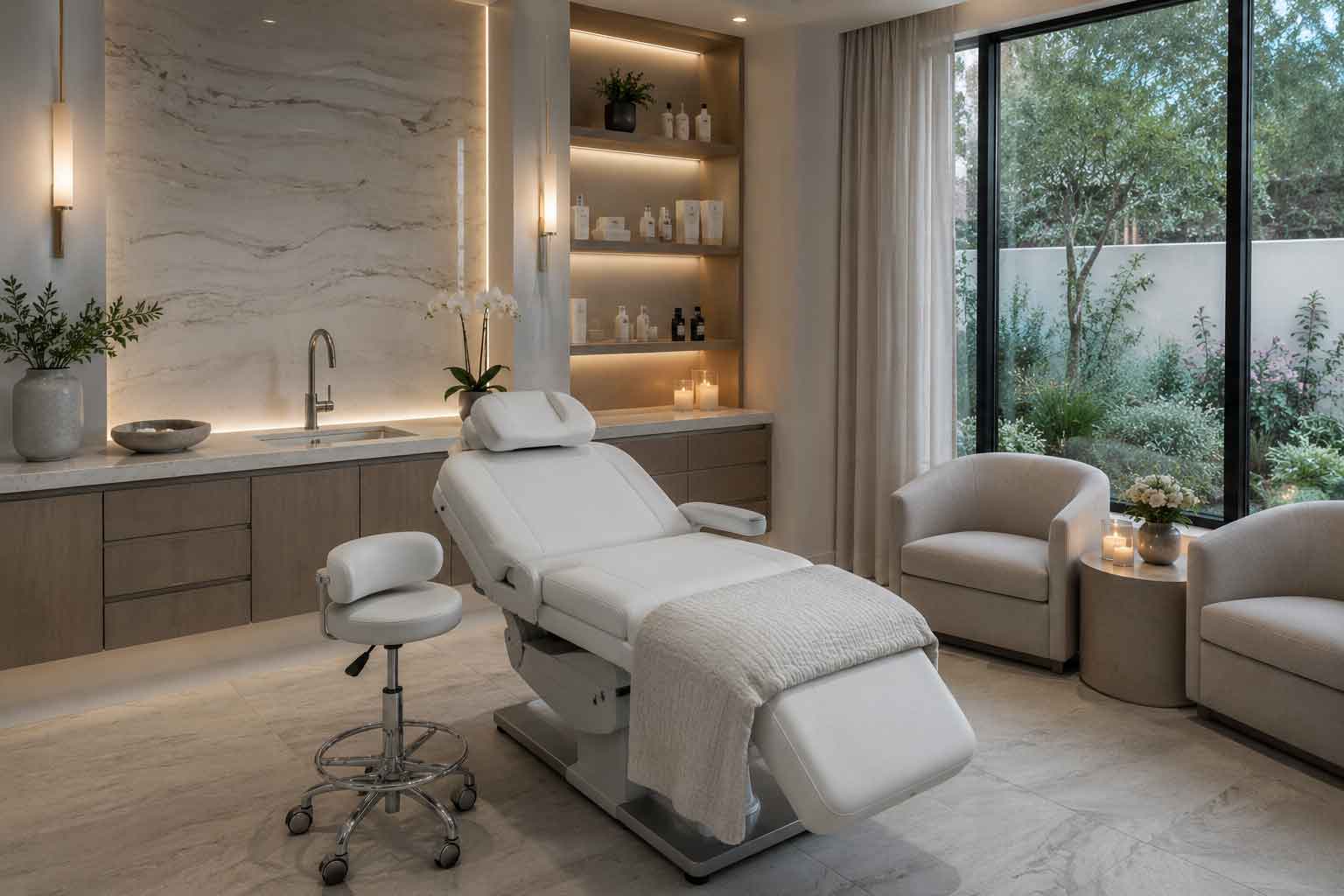
Most medical spa websites are underperforming for one simple reason.
They were designed to look attractive instead of functioning as patient acquisition systems.
In today’s aesthetics market, having a visually polished website is no longer enough. Patients are more informed, more skeptical, and more comparison-driven than they were even three years ago. Before booking Botox, fillers, RF microneedling, laser treatments, or medical weight loss consultations, they research providers extensively.
They compare reviews. They study treatment pages. They search Google Maps. They watch Instagram videos. Increasingly, they even use AI-driven search tools like ChatGPT and Perplexity to evaluate treatments and clinics.
That means your website is no longer just a digital brochure.
It is your most important trust-building and lead-generation asset.
The med spas generating the most consultations online are not always the ones spending the most on ads. In many local markets, they are simply the businesses with stronger treatment-page strategy, better local SEO, clearer messaging, and lower booking friction.
Most Med Spa Websites Do Not Have a Traffic Problem
One of the biggest misconceptions in med spa marketing is that more traffic automatically means more leads.
It does not.
A website attracting 1,500 highly targeted visitors every month can easily outperform a site receiving 10,000 low-quality visitors if the conversion structure is stronger.
This is especially true in aesthetics because aesthetic treatments are trust-sensitive purchases.
Patients are not just asking:
“Can this treatment help me?”
They are also asking:
- Will I still look natural?
- Is this provider experienced?
- Is this clinic reputable?
- What if something goes wrong?
- Is this treatment actually worth the money?
Most med spa websites fail because they never fully answer these concerns.
Instead, they rely on generic marketing language like:
“Achieve radiant skin.”
“Enhance your beauty.”
“Customized treatments for every patient.”
That type of copy no longer builds trust.
Specificity does.
The highest-performing treatment pages answer the exact questions patients are already searching online.
Treatment Pages Matter More Than Your Homepage
Many med spas spend heavily on homepage design while neglecting treatment-specific pages.
That is a major strategic mistake.
Most high-intent visitors never enter your website through the homepage.
They land directly on pages like:
- Botox near me
- Lip filler in Dallas
- Morpheus8 treatment
- Laser hair removal pricing
- Hydrafacial before and after
- Medical weight loss clinic
This is where SEO and AI-search behavior are changing the game.
Search engines increasingly prioritize pages that answer precise user intent. AI search systems also favor content that is structured clearly, conversationally written, and educational.
According to Google Search Central, helpful, people-first content performs better long term than thin pages created primarily for rankings.
That matters for med spas because many treatment pages are still extremely shallow.
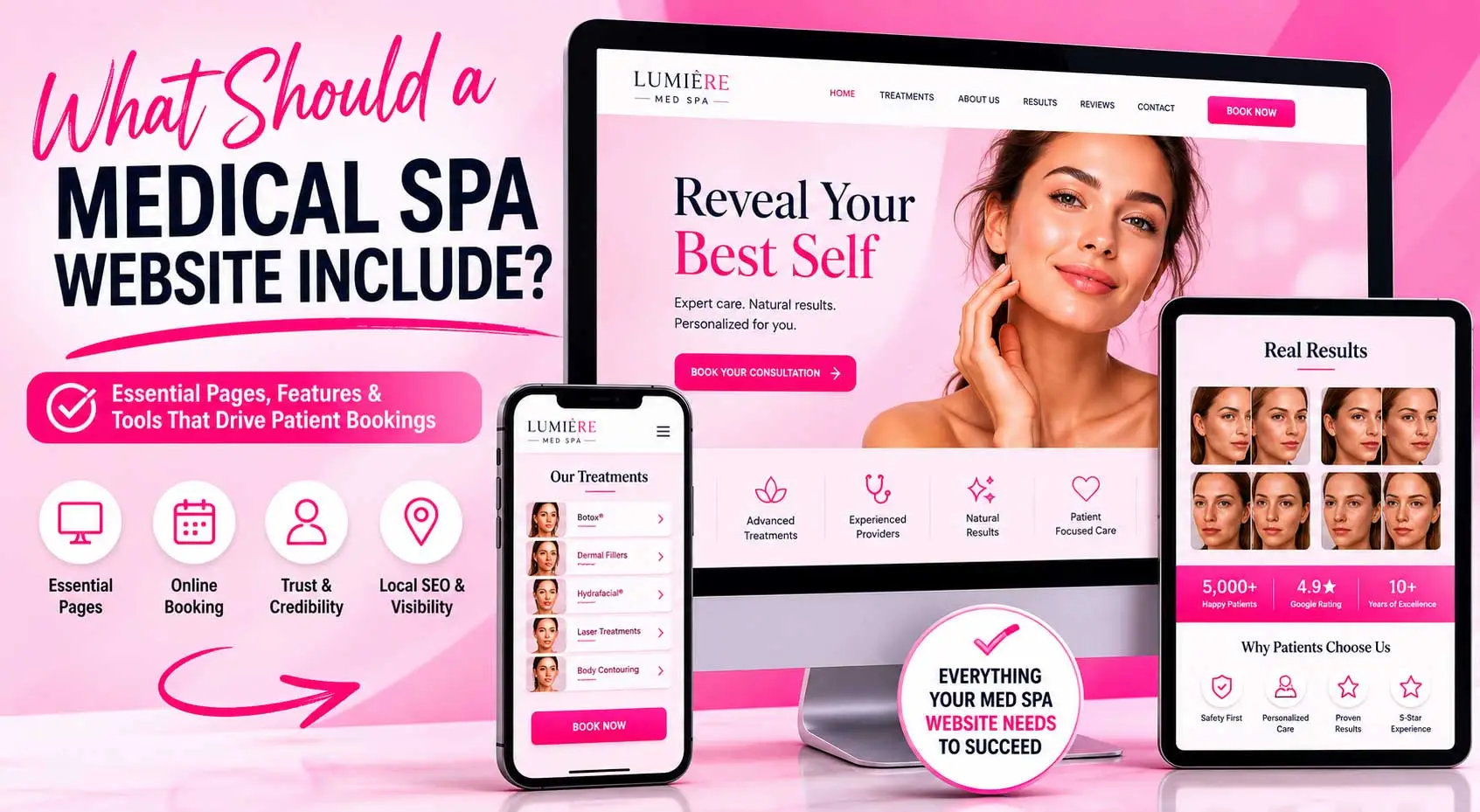
A strong treatment page should explain:
- candidacy,
- downtime,
- pain levels,
- expected results,
- recovery,
- pricing expectations,
- treatment comparisons,
- and realistic outcomes.
The more uncertainty your website removes, the more likely patients are to convert.
Local SEO Still Drives the Majority of Med Spa Leads
Despite the rise of AI search, local SEO remains one of the most important lead-generation channels for aesthetic clinics.
Searches like:
- “Botox near me”
- “Best med spa in Scottsdale”
- “Lip filler clinic in Miami”
- “Hydrafacial near me”
carry extremely high booking intent.
In competitive cities, the med spa with the strongest local search footprint usually wins a disproportionate share of consultations.
That footprint includes:
- optimized treatment pages,
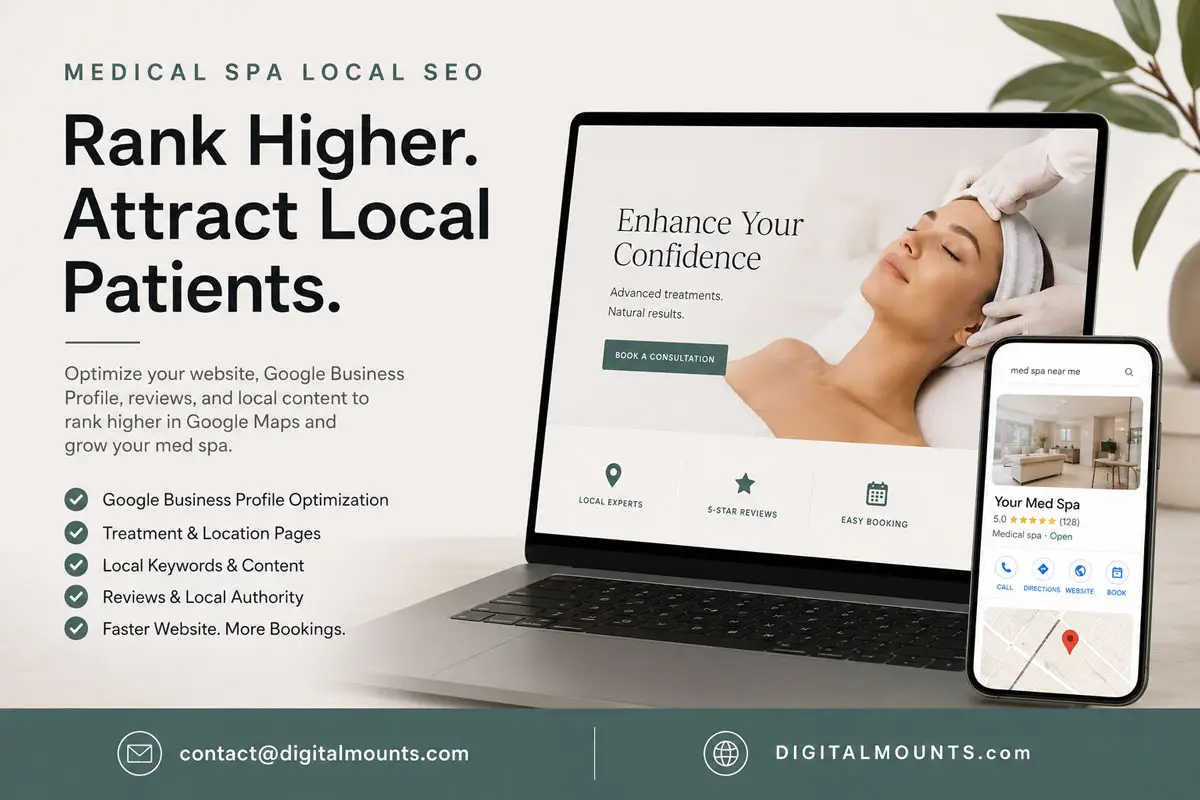
- Google Business Profile optimization,
- location-specific pages,
- strong review velocity,
- consistent local citations,
- and educational content.
Google itself recommends maintaining accurate local business information through your Google Business Profile. You can review best practices directly through Google Business Profile Help.
Many med spas underestimate how competitive local aesthetics search has become.
Especially in affluent suburbs and fast-growing metro areas, search visibility now directly affects patient flow.
The med spa ranking prominently in Maps and local organic results often captures leads before competitors even get considered.
AI Search Is Quietly Reshaping Med Spa Marketing
One of the biggest shifts happening right now is the rise of conversational and AI-assisted search.
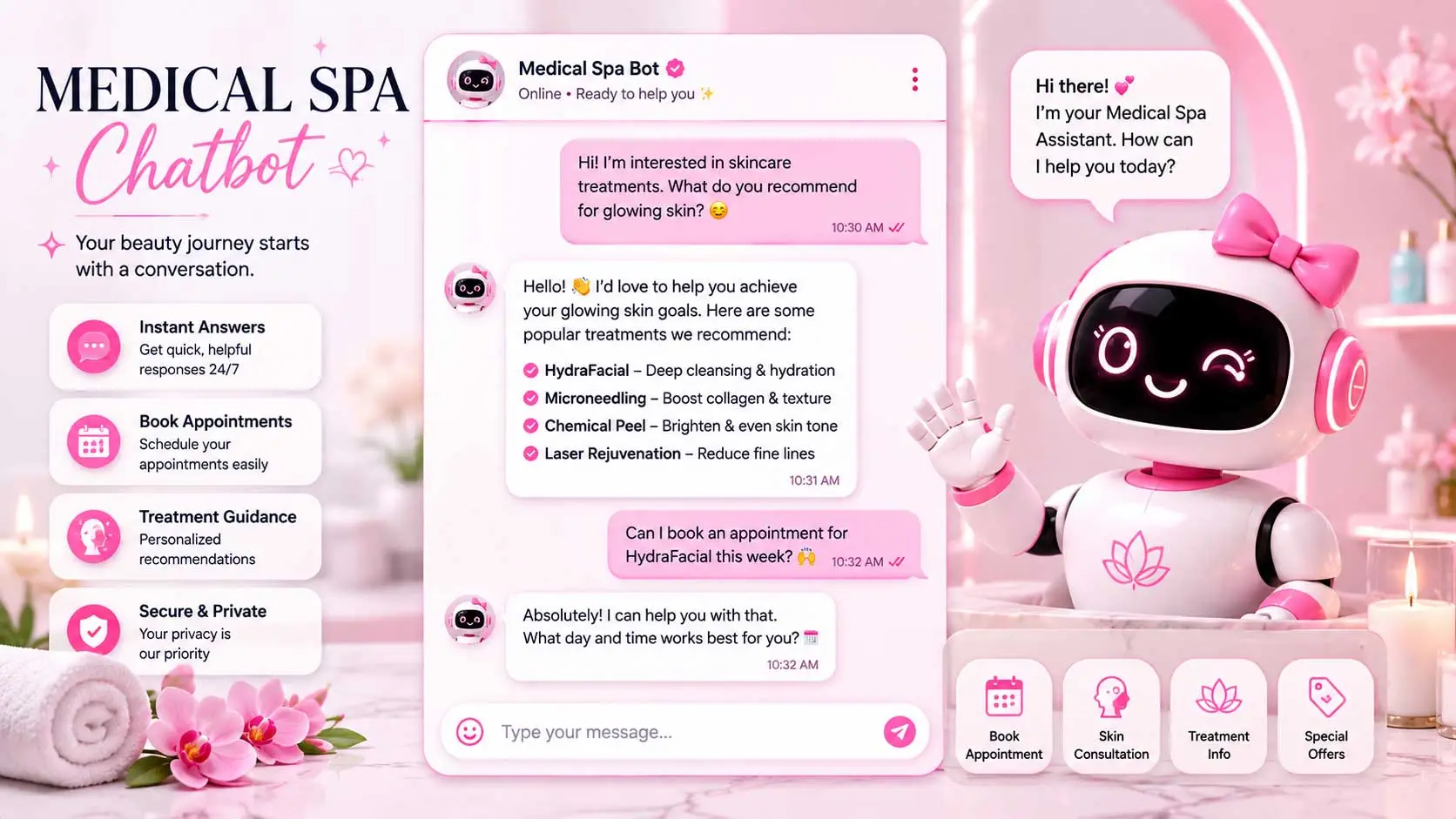
Patients increasingly use tools like ChatGPT, Gemini, Perplexity, and voice assistants to research treatments, compare procedures, and evaluate providers.
This changes content strategy significantly.
AI systems tend to favor content that is:
- educational,
- semantically rich,
- conversational,
- trustworthy,
- and highly specific.
Generic service pages are becoming less effective.
The med spas most likely to benefit from AI-search visibility are the ones publishing in-depth educational content consistently.
That includes:
- treatment guides,
- FAQ pages,
- comparison articles,
- localized treatment pages,
- and realistic expectation content.
For example, a page explaining “Botox vs Dysport” often performs better than a generic injectables page because it directly aligns with real search behavior.
AI optimization is not about gaming algorithms.
It is about becoming the clearest educational resource in your market.
Booking Friction Quietly Kills Conversion Rates
Many med spas lose leads because their websites make simple actions unnecessarily difficult.
Patients abandon websites when:
- forms are too long,
- mobile navigation is confusing,
- pages load slowly,
- pricing feels hidden,
- or booking buttons are difficult to find.
This matters because a large percentage of aesthetic traffic now comes from mobile users.
Patients often discover clinics through Instagram, TikTok, Google Maps, or reviews while casually browsing on their phones.
If your mobile experience feels frustrating, conversion rates drop quickly.
The highest-converting med spa websites prioritize clarity and speed.
They make it extremely easy for patients to:
- understand treatments,
- evaluate trust,
- contact the clinic,
- and book consultations.
Every extra step increases drop-off.
The Best Med Spa Websites Build Trust Before Selling
One of the most overlooked truths in aesthetics marketing is this:
Patients are not primarily looking for the fanciest website.
They are looking for reassurance.
Even luxury patients evaluating premium treatments want to feel emotionally safe before booking.
That is why educational depth matters more than flashy animations.
Strong med spa websites use:
- real provider credibility,
- before-and-after galleries,
- transparent treatment explanations,
- authentic reviews,
- and localized authority signals.
Trust is built through clarity.
Not hype.
And in most markets, the med spa that explains treatments more clearly often converts better than the clinic with the more visually impressive homepage.
Final Thoughts
The medical spas generating the most website leads today are not relying on a single tactic.
They are combining:
- local SEO,
- conversion-focused design,
- educational treatment content,
- AI-search optimization,
- and patient psychology.
Their websites are designed to reduce uncertainty quickly.
Because modern med spa marketing is no longer just about getting traffic.
It is about creating enough trust for patients to take action.
And increasingly, that decision happens online long before the consultation ever begins.
Need a Medical Spa Website That Actually Generates Leads?
At Digital Mounts, we build high-converting medical spa websites designed specifically for aesthetics businesses.
Our websites combine:
- local SEO strategy,
- AI-search optimization,
- treatment-page architecture,
- conversion-focused UX,
- and premium branding built for modern patient behavior.
Whether you run a Botox clinic, wellness med spa, laser center, or luxury aesthetics practice, we help transform your website into a patient acquisition system instead of just an online brochure.
Learn more about our med spa website design services at Digital Mounts Medical Spa Website Design.
Frequently Asked Questions
Why are treatment pages important for med spa SEO?
Treatment pages target high-intent keywords related to Botox, fillers, RF microneedling, laser treatments, and medical weight loss. Strong treatment pages improve both Google rankings and consultation conversions.
How does AI search affect medical spa marketing?
AI search tools like ChatGPT and Perplexity increasingly recommend businesses with educational, structured, trustworthy content. Med spas with detailed treatment pages and strong topical authority are more likely to appear in AI-generated search results.
What pages should every med spa website include?
Every med spa website should include treatment pages, city/location pages, provider bios, before-and-after galleries, FAQs, reviews, financing information, and strong consultation booking pages.
Does local SEO really help medical spas?
Yes. Local SEO helps med spas rank for high-intent searches like “Botox near me” and “best med spa in Dallas,” which can significantly increase qualified consultations and reduce reliance on paid ads.
How much does medical spa website design cost?
Professional medical spa website design in the U.S. typically ranges from $3,000 to $20,000+ depending on SEO strategy, custom development, content creation, AI-search optimization, and conversion-focused functionality. Digital Mounts have exclusive offer for medspa website design at $7500 | 30 day delivery.
Why is my med spa website not generating leads?
Most med spa websites fail because they lack strong treatment-page content, local SEO optimization, trust-building elements, and conversion-focused design. Patients need educational information and reassurance before booking consultations.
Ready to build a med spa website that actually generates patient leads?
Digital Mounts builds custom medical spa websites for a flat $7,500, delivered in 30 days, with up to 100 city-by-treatment landing pages, AI-search-ready architecture, and HIPAA-aware booking integration. No retainers. You own everything.